Home › Programmes › Odisha
My Education,
My Right
Adolescent girls from tribal and marginalised communities in Classes 8 to 10 stay in education and build the knowledge, confidence, skills and aspirations to pursue STEM and beyond.
Implemented by Restless Development India with support from the L’Oréal Fund for Women, January 2025 to December 2026. Results below are from Year 1 (January to November 2025). The Year 2 endline is under way.
Year 1 at a glance
18 schools, 9 blocks, one year
Ten outreach schools, two tribal schools and six model schools piloting mentorship, STEM clubs and STEM for social good.
Girls reachedPlus 600 boys in the same classes
Schools9 blocks of Ganjam
Youth Facilitators5 women and 1 man, trained
Parents engagedIn 7 schools' Parent Teacher Meetings
Students met role modelsAcross 4 role model interactions
Girls on exposure visitsA textile factory and the Govt. ITI, Berhampur
PrototypesBuilt for 2 hackathon share outs
Change storiesDocumented against a target of 12
Findings
What changed for girls
Share of girls giving the expected answer, before and after Year 1 sessions. Grades 8 to 10.
Selected items. Source: MEMR Year 1 Pre and Post Intervention Test. pp = percentage points.
Under wayYear 2 endline. Results for the full programme, January 2025 to December 2026, will be added when the analysis is complete.
Learn · Lead · Link in Odisha
What girls did in Year 1
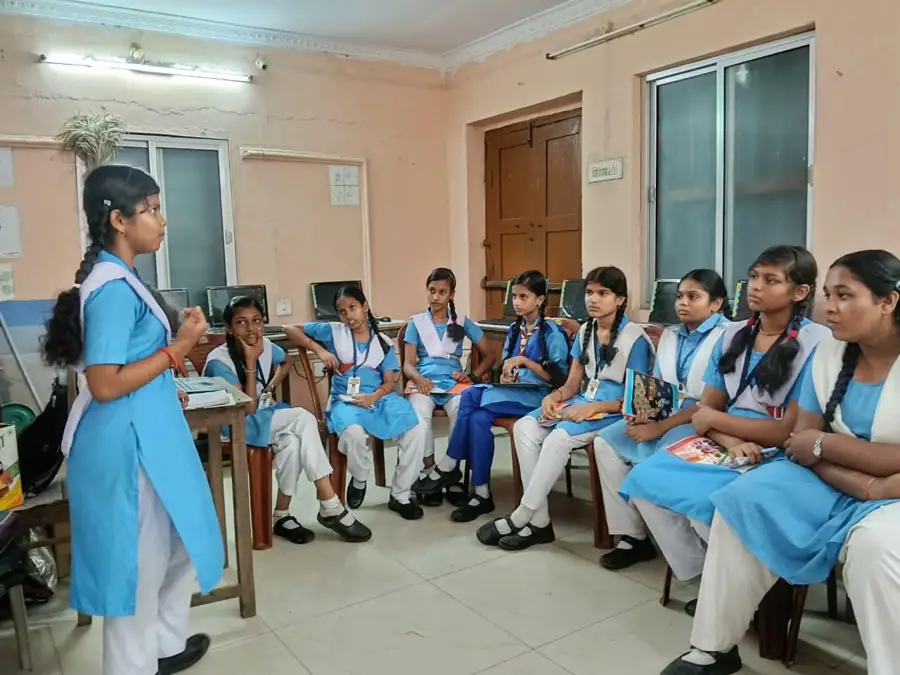
Classroom modules in every school, prototypes in the model schools, and links out to role models, workplaces and the community.
- Learn
Modules in their own language
Social emotional learning, gender and SRHR, coding and computational thinking, and careers, translated into the local language.
- Lead
Ideathons and hackathons
Model school groups designed prototypes for problems they chose, then presented them to teachers, headmasters and the Block Education Officer.
- Link
Role models and workplaces
Sessions with a pathologist, a forensic scientist, an economics professor and an education entrepreneur, and visits to a textile factory and an ITI.
Built by girls
Problems they chose, models they built
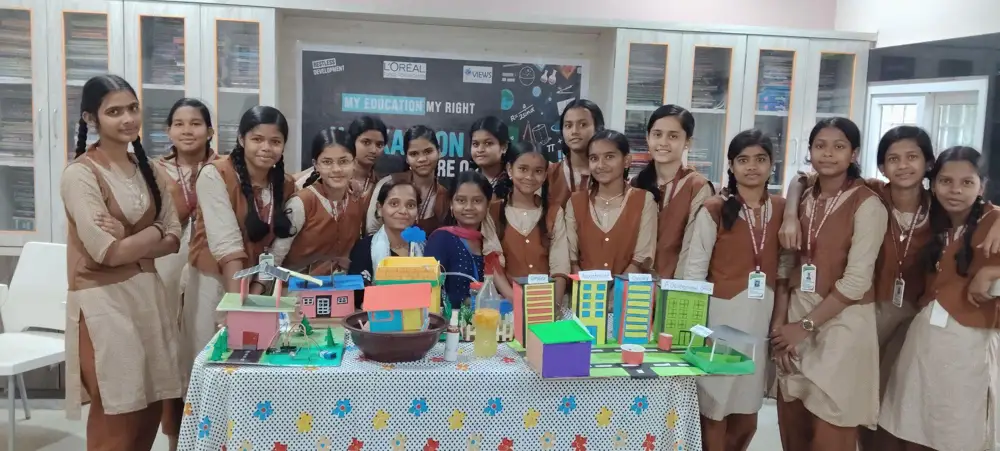
Students at Brundaban Govt. High School, Mother Sarojini Govt. Girls High School and Govt. Girls High School, Berhampur, brought 32 prototypes to two share outs. A selection:
- Rain detector
- Rainwater harvesting
- Gas detector
- Smart farming with solar energy
- Anti flood house
- Earthquake alarm
- Girls' safety spray
- Pad disposer
- Herbal cleanser
- School waste management
- Water tank overflow alarm
- Fire alarm system
- Smart dustbin
- QR code tree names
- Maths module in Scratch
What we learned
What worked, and what we changed
- Youth Facilitators became trusted, relatable bridges between school, home and community.
- Prototype models gave students strong ownership of their learning.
- Parent Teacher Meetings proved a key lever for changing norms.
- ChallengeWeather, school closures and local events disrupted session schedules.What we changedFlexible scheduling protocols.
- ChallengeVirtual mentorship depended on parents' smartphones, so many girls could not join consistently.What we changedIn person engagement prioritised in Year 2.
- ChallengeSeasonal migration interrupts girls' participation.What we changedPhased attendance tracking and re-engagement plans.
January 2025 to December 2026
What the programme leaves behind
My Education, My Right · Odisha closes in December 2026. These are the tools, people and relationships it has built, ready for schools, government and new partners to use.
- Curriculum
Classroom modules in the local language
Social emotional learning, gender and SRHR, coding and computational thinking, and career education for Classes 8 to 10.
- People
Trained Youth Facilitators
Six facilitators skilled in participatory sessions, coding, ideathons, hackathons and prototype making.
- Tested models
Three school prototypes
Mentorship and role models, STEM clubs with project based learning, and STEM for social good, piloted in model schools.
- Evidence
A pre and post assessment
A tested tool across STEM interest, critical thinking, perseverance and SRH knowledge, with Year 1 results for about 2,000 girls and a Year 2 endline under way.
- Relationships
Schools, officials and institutions
18 schools chosen with the education department, block education officers, and links to the Govt. ITI in Berhampur.
- Families
Parents as allies
Parent Teacher Meetings that proved a lever for changing norms around girls' education.
Open for partnership